
Play Book of Dead Now!
Home → Strategy
Book of Dead Strategy
Approaching Book of Dead sensibly
Book of Dead carries a theoretical RTP of 96.21%, which establishes a house edge of 3.79% over extended play sessions. This percentage represents the long-term statistical average rather than a guarantee for individual spins, requiring players to understand that short-term variance will always exceed this baseline. Consequently, bankroll management must account for potential dry spells where losses accumulate before any significant return occurs.
The game features high volatility alongside its 96.21% return, meaning wins are infrequent but potentially substantial when they trigger. This contrasts with lower volatility titles that offer smaller, more regular payouts but often carry different risk profiles for the player's capital. Players should anticipate longer periods without returns while waiting for the expanding wild mechanic to activate during the base game or free spins round.
Reactoonz by Play'n GO presents an RTP of 96.51%, slightly higher than Book of Dead's standard configuration. While this difference appears marginal, it illustrates how operator choices can significantly alter the expected return on investment for identical studio games. Understanding these variations helps players select the specific version of Book of Dead that aligns with their risk tolerance and mathematical expectations.
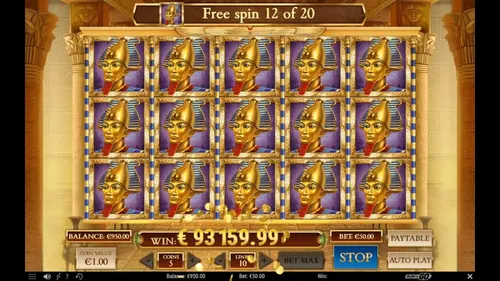
Bankroll rules that hold up
A sensible bankroll strategy requires setting aside funds strictly for entertainment, distinct from essential living expenses or savings goals. The bet range of €0.10 to €50 per spin allows for flexible allocation, though higher stakes accelerate the depletion of the available balance due to the 3.79% house edge. Maintaining a fixed budget prevents emotional decision-making during losing streaks inherent to high-volatility slot mechanics.
Flat betting involves wagering the same amount every round, which stabilizes the rate of bankroll erosion compared to progressive staking systems. Progressive methods raise stakes after losses, effectively shortening the time to ruin without altering the built-in mathematical advantage held by the casino. Consistent stake sizing ensures that the theoretical loss rate remains predictable based on total turnover and the established RTP figure.
The maximum win cap of 5000x sets a hard limit on potential returns, regardless of the number of spins attempted or bets placed. This ceiling defines the upper boundary of profitability, ensuring that even the most favorable symbol alignments cannot generate infinite gains. Players should calculate their expected value based on this multiplier relative to their average stake to determine realistic session outcomes.
Bet sizing against volatility
High volatility demands larger bankrolls relative to bet size because empty spins occur frequently between significant payouts. Betting at the top of the €0.10 to €50 range accelerates bankroll consumption unless the player has sufficient reserves to withstand extended dry spells. Smaller bets allow for more spins per unit of currency, increasing the likelihood of triggering the 10 free spins feature with random expanding symbols.
The 10 free spins round offers the primary opportunity for substantial wins through the expanding book symbol mechanism during gameplay. Since the payout structure relies on landing multiple expanding symbols across paylines, bet size directly influences the monetary value of each winning combination. A moderate stake balances the cost of entry with the potential reward, optimizing the risk-reward ratio for typical session lengths.
Reactoonz utilizes a 7x7 grid format, contrasting with Book of Dead's traditional 5x3 reel layout and 10 paylines. This structural difference affects how symbols connect and triggers bonuses, influencing the optimal bet sizing strategy for each respective title. Players adapting to Book of Dead must adjust their expectations regarding win frequency compared to grid-based cluster pays found in other Play'n GO releases.
Session limits worth setting
Time limits prevent fatigue-induced errors and help maintain discipline when facing the unpredictable nature of high-volatility slots. Setting a fixed duration for each session ensures that play remains within planned boundaries, reducing the temptation to extend play beyond the initial budget. This approach complements financial limits by capping exposure to the 3.79% house edge over extended periods.
Loss limits define the maximum amount a player is willing to lose before stopping, protecting against the psychological urge to chase deficits. Given the 5000x max win potential, players might remain engaged hoping for a large payout, but strict stop-loss rules prevent catastrophic bankroll damage. Adhering to these predefined thresholds ensures that gambling remains a controlled activity rather than an unregulated financial risk.
Win goals establish a target profit level at which the player stops playing, securing gains before the inevitable regression toward the mean occurs. Achieving a significant portion of the 5000x cap justifies ending the session, as subsequent spins statistically favor the casino due to the RTP structure. This disciplined exit strategy locks in positive results and avoids returning them to the house through continued play.
Why chasing losses fails
Chasing losses involves increasing bet sizes after defeats in an attempt to recover lost capital quickly, which exacerbates financial damage. The independent nature of each spin means previous outcomes have no influence on future results, making recovery strategies mathematically unsound. This behavior ignores the fixed house edge of 3.79%, guaranteeing that increased volume only accelerates the realization of expected losses.
Progressive staking systems raise stakes following losses, creating a false sense of control over random number generator outcomes. These methods do not alter the underlying probability distribution or improve the chances of hitting the expanding wild scatter symbol. Relying on such systems leads to rapid bankroll depletion, especially given the high volatility and wide bet range of €0.10 to €50.
The theoretical RTP of 96.21% applies over hundreds of thousands of spins, rendering short-term recovery attempts futile. No betting pattern can overcome the statistical disadvantage imposed by the casino's built-in margin on every wager placed. Accepting losses as part of the cost of entertainment prevents destructive behaviors and promotes sustainable, responsible gaming habits.
Book of Dead: key facts
| Parameter | Value |
|---|---|
| Game | Book of Dead |
| Studio | Play'n GO |
| Released | 2016 |
| RTP | 96.21% |
| House edge | 3.79% |
| Volatility | high |
| Max win | 5000x |
| Reels | 5x3 |
| Paylines / ways | 10 |
| Bet range | €0.10 – €50 |
Common systems and their limits
The Book of Dead slot from Play'n GO features a theoretical return to player rate of 96.21%, establishing a house edge of 3.79% over extended play sessions. This mathematical baseline dictates that no betting strategy can overcome the built-in casino advantage, regardless of how often players adjust their stakes or switch between symbols on the reels. Consequently, players should view any system claiming guaranteed profits as mathematically impossible within the constraints of this specific game's volatility and payout structure.
Legacy of Dead by Play'n GO offers a slightly higher RTP of 96.58%, demonstrating that even minor adjustments in game configuration significantly alter the long-term financial expectations for participants. Players comparing these two titles must recognize that the 0.37 percentage point difference represents a measurable variance in expected loss per million spins, affecting overall bankroll sustainability. Understanding this distinction helps gamblers select games that align with their risk tolerance rather than relying on ineffective progression strategies.
The maximum win cap of 5000x sets a hard upper limit on potential payouts, preventing infinite growth scenarios that some progressive betting systems might hypothetically exploit. Since the game operates on fixed paylines and expanding wild mechanics, outcomes remain random and independent, ensuring that past results never influence future spin probabilities. This structural rigidity reinforces the reality that short-term wins are statistically rare events rather than predictable patterns achievable through systematic wagering approaches.
Flat betting explained
Flat betting involves maintaining a constant stake amount throughout every session, which directly interacts with the Book of Dead bet range starting at €0.10 per spin. By keeping wagers uniform, players avoid the rapid bankroll depletion associated with aggressive progression methods, allowing the 96.21% RTP to function as intended over thousands of spins. This disciplined approach minimizes emotional decision-making and ensures that each round contributes equally to the overall statistical expectation without introducing unnecessary variance.
The high volatility characteristic of this Play'n GO title means that flat betting requires patience, as wins may be infrequent but potentially substantial when they occur. With a maximum win of 5000x available through the free spins feature, consistent low-stakes play preserves capital during dry spells while remaining eligible for large payouts. Players adopting this method must accept that their bankroll will experience significant fluctuations, yet the total exposure remains controlled compared to escalating stake strategies.
Comparing flat betting to progressive systems highlights why maintaining a steady €0.10 to €50 wager range prevents catastrophic losses during losing streaks. The gamble round option introduces additional risk-reward dynamics, but sticking to base game bets ensures that the fundamental house edge of 3.79% governs all outcomes. This stability allows players to extend their playing time and enjoy the expanding wild mechanics without risking immediate bankruptcy from poorly timed stake increases.
Progressive staking risks
Progressive staking involves raising stakes after losses, a method that fundamentally alters the time to ruin without changing the underlying 96.21% RTP of Book of Dead. Each increased wager amplifies the impact of the 3.79% house edge, accelerating bankroll depletion during inevitable downswings inherent to high-volatility slots like this Play'n GO release. Players attempting to recover losses through larger bets often find themselves facing insurmountable deficits before achieving the rare 5000x max win required to break even.
The 10 free spins feature with random expanding symbols creates periods of heightened excitement, yet increasing stakes before entering this bonus round does not improve winning probability. Since the expanding symbol is chosen randomly and applies to all matching symbols during the retrigger, wager size has no bearing on the outcome distribution or payout multiplier. Relying on progressive methods during these features assumes control over random number generator results, which remains statistically impossible regardless of stake adjustments made by the player.
Legacy of Dead shares similar volatility traits with Book of Dead, meaning progressive staking failures manifest identically across both Play'n GO titles due to comparable mathematical models. When players escalate bets following losses, they effectively shorten their session duration while exposing more capital to the same unfavorable odds embedded in each spin. This behavior contradicts responsible gambling principles, as it transforms entertainment into a high-risk financial endeavor with predetermined negative expectations over time.
What the maths actually allows
The theoretical return to player of 96.21% for Book of Dead implies that for every €100 wagered, approximately €96.21 returns to players over millions of spins. This calculation excludes short-term sessions where variance dominates, meaning individual players frequently experience results deviating significantly from the long-run average predicted by the house edge of 3.79%. Understanding this distinction prevents unrealistic expectations about quick profitability while acknowledging that sustained play gradually converges toward the stated mathematical baseline.
High volatility ensures that wins occur less frequently but carry larger multipliers, contrasting sharply with low-volatility slots that offer regular small payouts. The 5000x maximum win represents the ceiling for single-spin outcomes, requiring specific combinations of expanding wilds during the 10 free spins feature to achieve such results. Players must allocate sufficient bankroll to withstand prolonged periods without hitting major bonuses, recognizing that the game's design prioritizes occasional large payouts over consistent moderate returns.
Other RTP configurations ranging from 94.25% down to 84.18% exist for operator-configurable versions, significantly impacting expected returns if players encounter these variants. A version offering only 84.18% RTP increases the house edge substantially, reducing long-term value compared to the standard 96.21% version found in most reputable casinos. Verifying the specific game version before playing ensures transparency regarding potential earnings, as lower RTP settings directly diminish the statistical advantage available to skilled bankroll management.
Reading variance honestly
Variance in Book of Dead manifests as extreme swings between long losing streaks and sudden massive payouts, reflecting the high volatility rating assigned by Play'n GO. Players observing consecutive non-winning spins should recognize this as normal distribution behavior rather than evidence of malfunction, given the fixed 10 payline structure and random symbol generation. Accepting this reality prevents chasing losses through irrational betting patterns while maintaining focus on the entertainment value provided by the expanding wild mechanics.
The 300% welcome bonus up to €2,000 plus 100 free spins provides additional playing capital, yet wagering requirements typically restrict immediate withdrawal of bonus funds. These terms require generating significant turnover before converting promotional credits into withdrawable cash, extending the effective playtime beyond the initial deposit amount. Players utilizing such offers must calculate whether the associated turnover obligations align with their preferred stake levels within the €0.10 to €50 betting range.
Legacy of Dead exhibits comparable variance patterns due to identical developer mathematics, confirming that high-volatility slots share similar risk profiles regardless of thematic differences. Observing how other players react to volatile outcomes provides insight into common psychological pitfalls, such as increasing stakes after losses or abandoning strategies prematurely. Honest assessment of personal tolerance for financial fluctuation remains essential when selecting between these titles, ensuring alignment between individual risk appetite and game characteristics.
Learning the game in demo first
Book of Dead by Play'n GO features a 5x3 reel layout with ten paylines, allowing players to test mechanics without financial risk. The high volatility means wins are less frequent but potentially larger than in low-variance titles. This structure helps users understand the expanding wild scatter symbol behavior before committing real funds.
The theoretical return to player stands at 96.21%, establishing a house edge of 3.79% over extended play sessions. Players can observe how the gamble round affects bankroll stability when attempting to double winnings via card color or suit selection. Understanding these probabilities prevents unrealistic expectations during actual gameplay.
Tome of Madness offers a higher RTP of 96.59% with a 5x5 grid and max win of 2000x, contrasting with Book of Dead's 5000x cap. Comparing these metrics highlights how different studio designs impact payout frequency and size. Such analysis aids in selecting slots that match individual risk tolerance levels.
Adjusting stakes to your budget
Book of Dead allows bets ranging from €0.10 to €50 per spin, providing flexibility for various bankroll sizes. A flat betting strategy using the minimum stake extends playtime significantly compared to progressive staking methods. This approach minimizes the rapid depletion of funds during unlucky streaks.
With high volatility, small consistent bets help survive dry spells while waiting for the random expanding symbol feature. Each free spin round can yield up to 5000x the total bet, rewarding patience with substantial returns. Maintaining steady wagers ensures the session remains within predetermined financial limits.
Tome of Madness caps its maximum win at 2000x, half of Book of Dead's potential 5000x payout. This difference suggests Book of Dead carries greater variance, requiring more reserve capital to withstand losses. Adjusting stake sizes accordingly protects against early bankruptcy during extended gaming periods.
Recognising a bad session
A rapid decline in bankroll indicates the built-in 3.79% house edge is operating effectively against the player. If consecutive spins fail to trigger the ten free spins bonus, the expected value remains negative over time. Monitoring balance drops helps identify when statistical variance works unfavorably.
The maximum win of 5000x represents an outlier event unlikely to occur frequently in short-term play. Chasing losses after hitting this cap often leads to further deficits due to the game's high volatility nature. Setting strict loss limits prevents emotional decision-making during prolonged losing sequences.
Tome of Madness has a lower max win of 2000x, suggesting slightly less extreme variance than Book of Dead. However, both titles share Play'n GO's design philosophy favoring big payouts over frequent small wins. Recognizing this pattern helps players accept inevitable downswings without altering their strategy impulsively.
Stopping while ahead
Securing profits requires cashing out before the 3.79% house edge erodes accumulated gains during subsequent spins. If a player hits a significant portion of the 5000x max win, withdrawing ensures realized value rather than theoretical potential. Locking in winnings preserves the initial investment plus profit margin.
The gamble round offers a choice to risk current winnings for double rewards via card color or suit prediction. Declining this option immediately after a large slot win prevents unnecessary exposure to binary chance outcomes. Consistent withdrawal policies protect against the temptation to reinvest unexpected windfalls into volatile cycles.
Tome of Madness provides a 2000x ceiling, meaning smaller absolute gains compared to Book of Dead's 5000x possibility. Regardless of the specific cap, the principle of stopping while ahead applies equally across high-volatility slots. Discipline in managing realized profits distinguishes successful players from those who give back earnings.
Responsible play in practice
Setting daily loss limits based on the €0.10 minimum stake ensures even extensive sessions remain affordable for most budgets. Playing only with disposable income prevents interference with essential living expenses or savings goals. This discipline aligns with the theoretical 96.21% RTP expectation over long durations.
Taking regular breaks during the ten free spins feature helps maintain clear judgment regarding subsequent wagering decisions. High volatility games like Book of Dead can induce fatigue due to their unpredictable payout intervals. Structured pause intervals reduce impulsive betting behaviors driven by recent near-misses or losses.
Tome of Madness shares similar responsible gaming challenges despite its distinct 5x5 layout and 2000x max win. Implementing self-exclusion tools or deposit caps provides additional safeguards against problem gambling tendencies. These measures complement the inherent mathematical edges present in all casino slot products.
DemoRTP & VolatilitySymbols & PayoutsBonus FeaturesStrategyBonusesMobileDownload & AppMax WinSimilar GamesReviewFAQSitemap
Book of Dead 2026